
18 December 2024
Nowadays, the needs of buyers and tenants are not the same as they were one or two decades ago. Modern lifestyles have led to an increasing demand for properties that offer flexibility and can adapt to multiple uses or situations, while being more economically accessible.
In this regard, at Brickstarter, we have always been attentive to market needs and dynamics, and we started by promoting vacation projects focused on generating income for our investors, without any guarantee. These projects aimed to generate returns from tourist rentals in key destinations. However, in our commitment to adapt to market dynamics and diversify our offering, we evolved and moved toward coliving projects, an innovative model that, although its expected returns may be lower, aims for more regular income. More recently, we have taken a new step in our evolution by incorporating change-of-use projects, taking into account the constant need to innovate in the real estate market.
These challenges also open the door to innovative opportunities that can be capitalized on. For this reason, we would like to promote a series of projects under a new type and investment model: Real Estate Flipping.
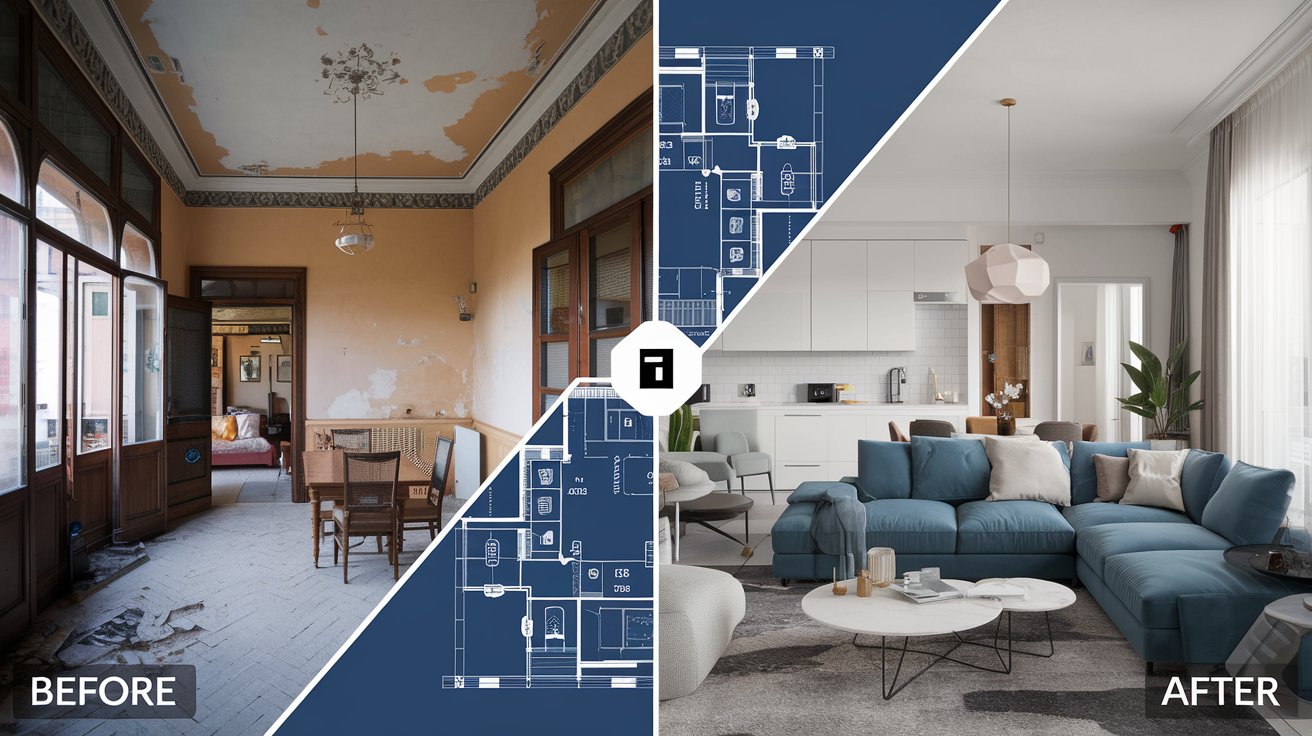
Real estate flipping involves buying a property at a reduced price, improving its condition through renovations or upgrades, and then selling it at a higher price in a short period of time. The goal of this new model is to generate a financial result by taking advantage of any increase in the property's value after improvements; this result is not guaranteed. Although we are going to put our own “spin” on it!
The key to flipping lies in speed and value creation. It's not just about buying low and selling high, but identifying properties with improvement potential and latent demand, performing renovations that make a difference in quality and functionality, and bringing the product to market precisely when the demand is ready to absorb it.
This strategy aims to shorten the investment cycle; if a sale happens sooner, the estimated IRR could be higher, although neither the timing nor the result is guaranteed.
It is worth noting that we have carried out operations with a similar approach (past data, not a guarantee of future results).
We will continue publishing medium-term projects; the IRR could be higher if the sale happens sooner, although this is not guaranteed. Our priority remains selecting opportunities that meet our criteria.
The difference is that now we are publishing them as such, and our short-term objective will be to sell them from the very beginning. To achieve this, we must change the approach to our projects and the assumptions of our business plan.
We invite you to read our blog post about the new Calle Lucena project, which is a very ambitious flipping project, and to visit the first opportunity of this new project, Calle Lucena Estudio-A.
Past or estimated returns do not guarantee future returns. Investing involves a risk of total or partial loss of the invested capital.
Soon you will receive an email to confirm your Brickstarter account.
We hope to see you soon!
